

Growing Your Neurofeedback Practice Without Building Your Own Technology
Why More Clinicians Are Turning to White Label Neurofeedback Software to Expand Their Practices
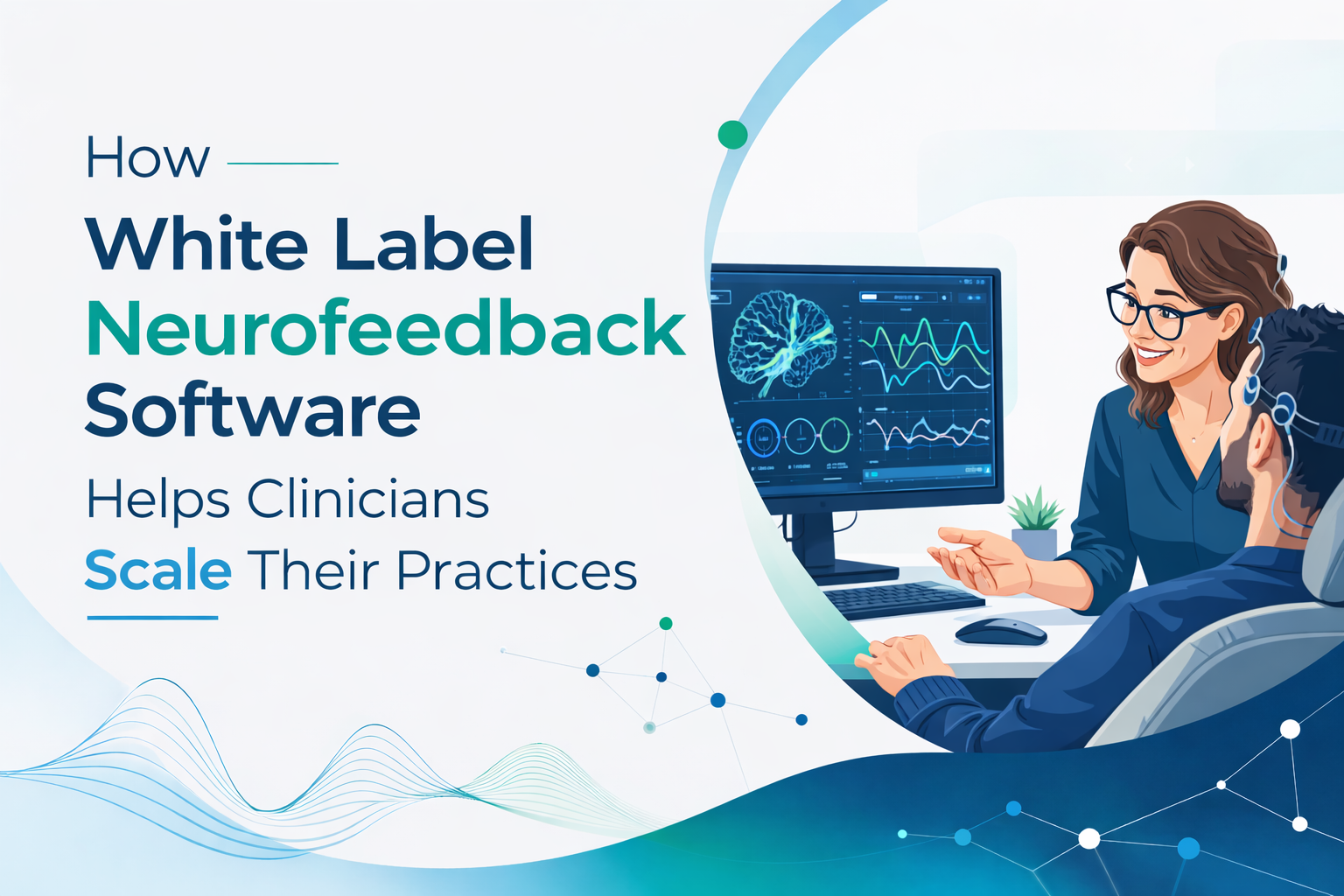
White label neurofeedback software is quietly changing how clinicians grow their practices, making it possible to offer advanced brain training services without building complex technology from scratch. If you run a neurofeedback clinic—or are considering adding neurofeedback to an existing practice—you’ve likely encountered a familiar challenge: how do you expand your services while still keeping your workflow manageable?
White label neurofeedback software is part of a broader shift in how specialized services are delivered through modern software platforms. Across industries—from marketing automation to fintech—organizations increasingly rely on white-label technology to expand their offerings without building the underlying infrastructure themselves. Technology analysts note that companies often adopt white-label solutions because they allow new services to launch faster while reducing the cost and risk associated with developing proprietary software from scratch. (See this explanation of the white-label model from TechnologyAdvice.)
At its core, white-label software is built by one company but rebranded and delivered by another under its own name. This approach allows organizations to offer sophisticated digital tools without investing years in engineering resources or product development. As software engineering firm EPAM explains, many companies adopt white-label platforms precisely because they enable businesses to deliver complex technology while focusing their time on their core expertise rather than maintaining the software itself.
This model has become especially attractive in fields that combine clinical expertise with advanced technology—and neurofeedback is a clear example. Modern neurofeedback systems rely on sophisticated signal processing, training algorithms, and data interpretation tools. While these technologies can produce powerful clinical insights, developing them independently would require resources far beyond what most clinical practices can reasonably invest.
White label neurofeedback software addresses that challenge by allowing clinicians to offer advanced brain training services under their own brand while relying on a fully developed neurofeedback platform behind the scenes. Instead of managing complex technical infrastructure, you can focus on what matters most: understanding your clients’ brain activity, guiding their training process, and delivering meaningful clinical outcomes.
As interest in neurofeedback continues to grow, many clinicians are exploring how to expand their services without increasing operational complexity. White label platforms provide one possible path forward.
In this post, you’ll learn how white label neurofeedback software can help you expand services, streamline your workflow, and create a practice that is both scalable and sustainable.
Why White Label Neurofeedback Software Changes the Growth Equation
At its core, neurofeedback is a learning process in which the brain receives real-time feedback about its electrical activity and gradually learns to regulate itself more effectively. According to the National Center for Biotechnology Information, neurofeedback works by measuring brainwaves and providing feedback signals that help individuals gain voluntary control over certain neural patterns.
This process is clinically powerful, but implementing it efficiently requires the right software infrastructure.
White label neurofeedback software solves several problems at once. Instead of forcing clinicians to adopt rigid systems or invest years into building proprietary platforms, it allows providers to use sophisticated neurofeedback technology under their own brand identity.
For your practice, that means:
- You maintain your clinic’s branding and patient experience
- Training tools, reports, and workflows are already developed
- Updates and improvements happen automatically
- You can focus on clinical outcomes rather than technical maintenance
Over time, this approach removes many of the operational barriers that typically limit growth.
Creating a More Efficient Clinical Workflow
One of the biggest obstacles in scaling a neurofeedback practice is complexity. Each client requires assessment, protocol selection, session monitoring, and follow-up evaluation. When these steps are handled through disconnected tools, the administrative load increases dramatically.
White label platforms solve this by bringing the entire process into one system.
For example, many modern neurofeedback platforms integrate qEEG assessment, training protocols, and reporting into a single interface. This unified workflow allows clinicians to move from brain mapping to training without juggling multiple software environments.
The broader clinical model behind functional neurofeedback suggests that integrated analysis can personalize training protocols across biological and behavioral factors. In other words, the more streamlined your workflow becomes, the easier it is to see more clients while maintaining high-quality care.
Scaling Services Without Diluting Your Brand
Another challenge many clinicians face when expanding their practice is maintaining a consistent brand experience.
Clients don’t just choose a neurofeedback provider for the technology; they choose a provider they trust. That trust comes from your clinic’s reputation, your communication style, and the overall experience you create.
White label software preserves that relationship. Because the platform operates under your brand, your clients see your practice—not a third-party software company—guiding the process.
This consistency becomes even more important as your practice grows. Whether you expand to additional clinicians, open a second location, or introduce home training services, the client experience remains recognizable.
In fact, many clinicians find that community support and training resources also play a role in scaling successfully. Structured onboarding, mentoring, and shared knowledge networks can help clinicians strengthen both clinical skills and business operations as they grow.
Supporting Better Clinical Outcomes Through Neuroplasticity
Growth alone is not the goal of a neurofeedback practice. Ultimately, the reason clinicians adopt these systems is to improve outcomes for their clients.
Neurofeedback works because the brain is capable of change. This capacity—known as neuroplasticity—allows neural pathways to reorganize based on experience and feedback. The concept was popularized through decades of research showing that the adult brain can reorganize itself in response to training and learning.
When neurofeedback systems are designed with this principle in mind, they help clinicians guide the brain toward healthier patterns through repeated reinforcement. Brain plasticity and neurofeedback strengthen neural connections and supports lasting cognitive and emotional improvements.
By using software that organizes data, tracks progress, and adapts protocols, clinicians can support this learning process more effectively.
Expanding Your Practice with Confidence
If you step back and look at the trajectory of neurofeedback over the past two decades, a pattern emerges. Early adopters often struggled with fragmented tools and steep technical learning curves. Today, integrated platforms are making the field far more accessible.
White label neurofeedback software plays a major role in that shift—allowing clinicians to launch new services faster, maintain full control over their brand, and operate with systems that are built specifically for neurofeedback training. Instead of reinventing infrastructure, you can invest your time where it matters most: understanding the brain, guiding clients through training, and refining your clinical approach.
As more clinicians discover neurofeedback, the practices that scale successfully will be those that combine clinical expertise with systems designed for growth.
If you’re exploring how to expand your services—or how to introduce neurofeedback into your practice for the first time—take a closer look at how integrated systems can support that goal.

NewMind Technologies
NewMind Technologies, established in 2005, provides neurofeedback solutions tailored for clinicians and wellness practitioners. NewMind's system integrates EEG-based brain mapping with cognitive assessments to create individualized training protocols. Designed for both in-clinic and remote settings, the software emphasizes ease of use while offering advanced features. Beyond the technology, NewMind offers educational resources, including self-guided certification courses and weekly webinars, to support ongoing professional development