

Beyond the EEG: Using Biopsychosocial Assessment Tools in Neurofeedback
When the Brain Map Isn’t the Whole Story
Imagine two clients coming into your practice with nearly identical qEEG patterns. On paper, their brain maps suggest similar dysregulation—perhaps elevated beta activity or underactive alpha.
But once you start working with them, the differences become obvious.
One is a high-performing executive dealing with chronic stress and poor sleep. The other has a history of trauma and struggles with emotional regulation in daily life. Their brainwave patterns may look alike, but their lived experiences and what they need from training are very different.
This is where many clinicians run into a quiet limitation of neurofeedback.
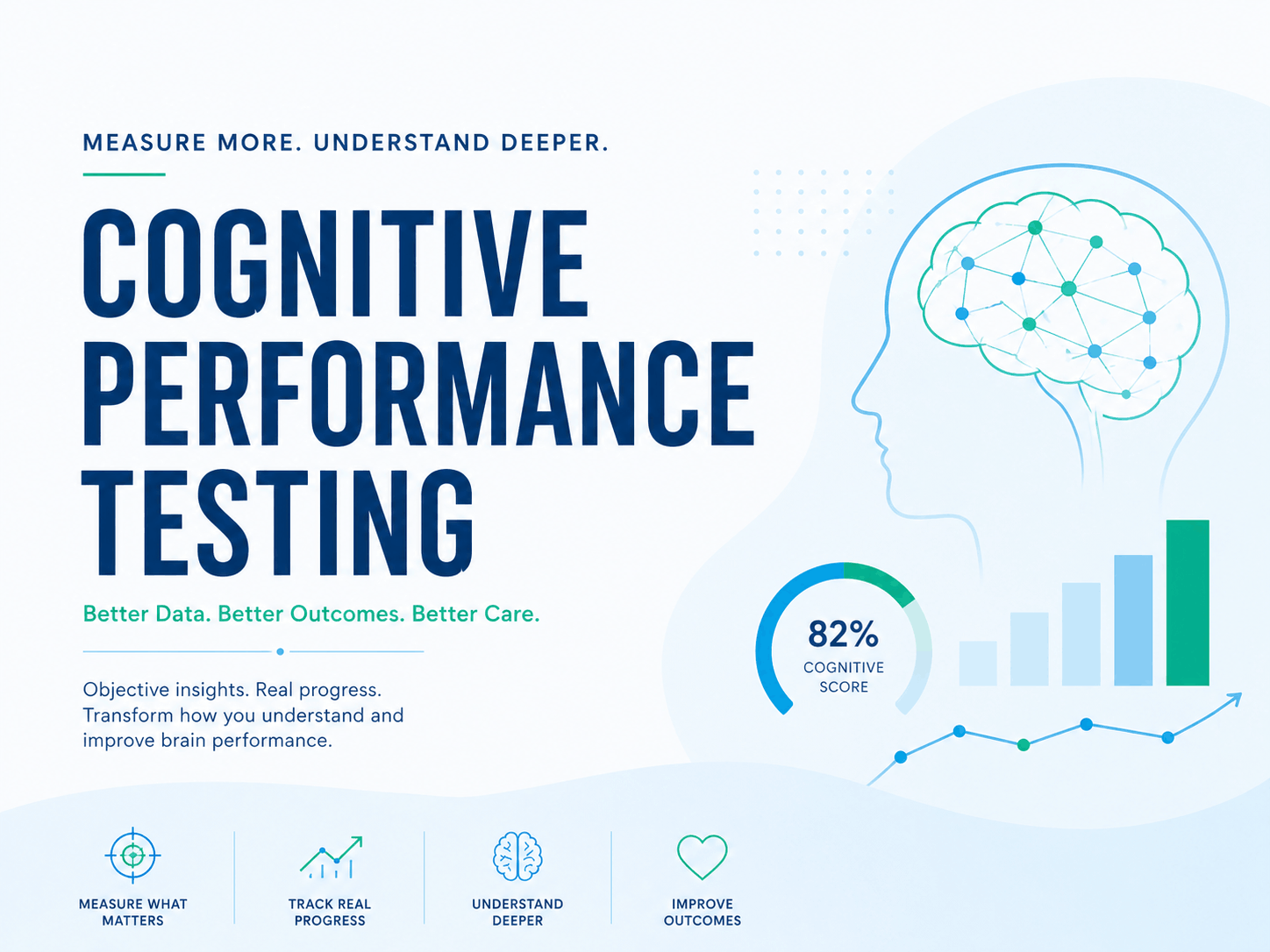
EEG data is incredibly valuable. It gives us a direct window into brain function. But on its own, it doesn’t tell the full story of the person sitting in front of you.
That’s where a biopsychosocial approach becomes essential. By combining brain-based data with structured insights into behavior, psychology, and environment, clinicians can move from simply identifying patterns to truly understanding them.
What the EEG Can—and Cannot—Tell You
qEEG and EEG-based assessments are powerful tools. They allow clinicians to:
- Identify patterns of dysregulation
- Pinpoint areas of over- or under-arousal
- Track changes in brain activity over time
This kind of objective data is one of the defining strengths of neurofeedback. However, EEG has its limits.
It doesn’t explain why a pattern exists. It doesn’t reveal whether a client’s anxiety is rooted in workload, trauma, sleep deprivation, or something else entirely. It also doesn’t show how those patterns affect day-to-day functioning, whether someone can focus at work, manage relationships, or regulate their emotions under pressure.
In other words, EEG answers what is happening in the brain, but not always why it’s happening or how it shows up in real life. Without that context, even the most accurate brain map can lead to incomplete clinical decisions.
Understanding the Biopsychosocial Model
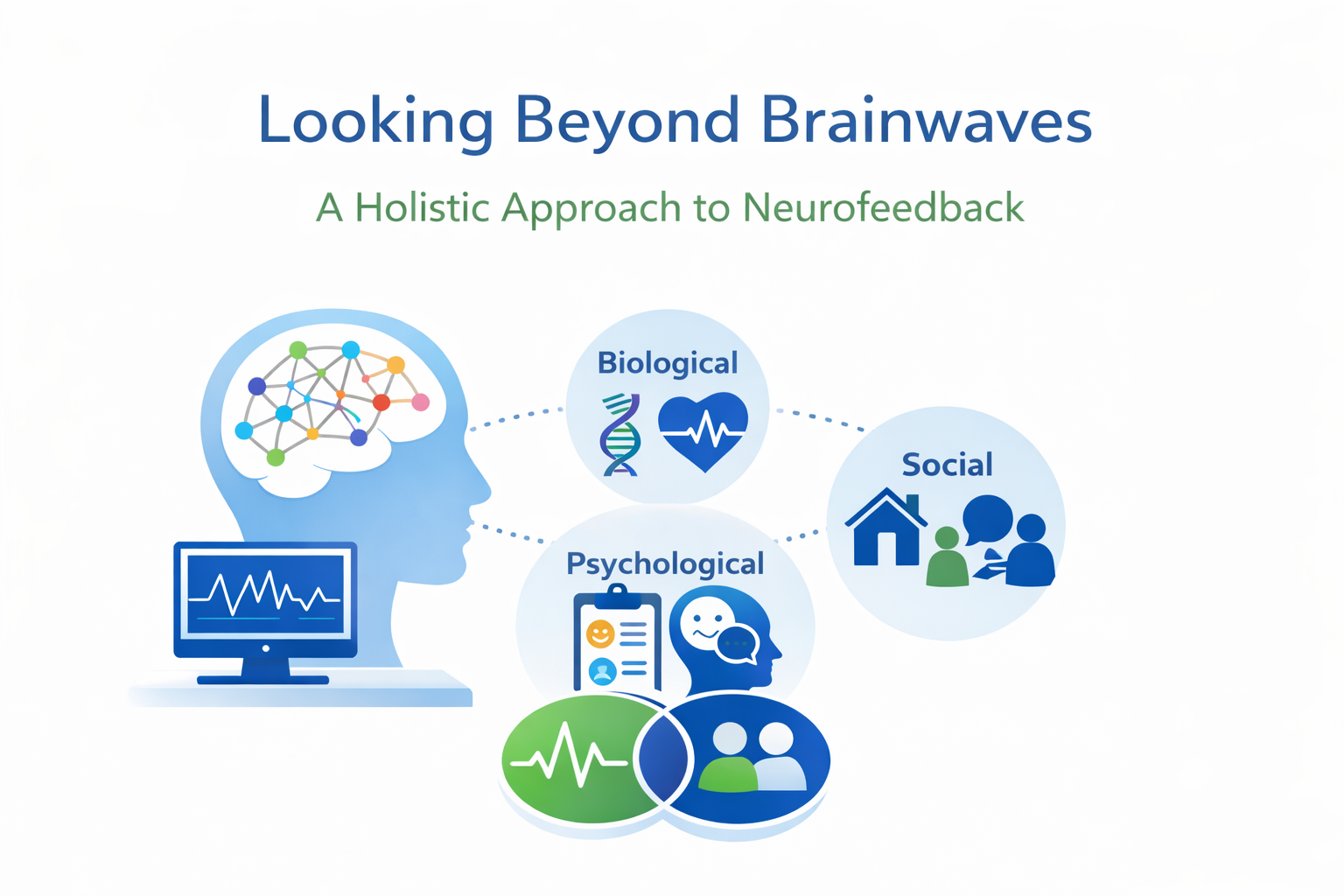
The biopsychosocial model offers a more complete way to understand clients by looking at three interconnected areas:
- Biological: brain function, nervous system activity, sleep, health conditions, medications
- Psychological: thoughts, emotions, coping patterns, trauma history
- Social: environment, relationships, work stress, lifestyle factors
Of course, neurofeedback sits primarily in the biological domain because it targets brain regulation directly, but the outcomes of that training are shaped by all three areas.
For example, a client with attention issues may show similar EEG patterns whether their challenges stem from ADHD, chronic stress, poor sleep, or environmental overload. Without additional context, it’s easy to misinterpret what the brain data is pointing to. Using a biopsychosocial framework allows clinicians to connect the dots, linking brain activity to real-world experience.
In practice, this means that EEG answers the question of what’s happening in the brain, but it doesn’t fully answer why it is happening or how it affects your client’s daily life. Research published by the National Institute of Mental Health consistently emphasizes that mental health outcomes are shaped by multiple interacting factors, not a single biological variable. Once you begin to see EEG as one piece of a larger system, your approach naturally becomes more precise and more flexible.
It’s important to remember that the biopsychosocial model isn’t just theoretical. Indeed, it’s widely supported in clinical practice and the American Psychological Association has long emphasized the biopsychosocial model as a foundation for understanding complex mental health conditions. The key takeaway here is that when you apply this framework within neurofeedback, you move from treating isolated signals to working with the full context of the person in front of you.
Key Biopsychosocial Assessment Tools to Use Alongside EEG
To bring the biopsychosocial model into practice, clinicians need more than intuition; they need structured tools to help translate subjective experiences into measurable data that can guide decision-making:
Symptom Rating Scales
When you use structured symptom scales, you create a baseline that reflects your client’s subjective experience. These tools allow you to quantify symptoms like anxiety, depression, and attention challenges in a way that can be tracked over time.
More importantly, symptom scales help you align brain data with lived experience. If a client reports significant distress, but shows only mild dysregulation on EEG, that discrepancy tells you something meaningful. In contrast, strong EEG findings paired with minimal reported symptoms may suggest resilience or compensatory strategies that you would otherwise miss.
Behavioral and Functional Assessments
Furthermore, behavioral assessments shift your focus from internal patterns to real-world performance, enabling you to see how how symptoms affect sleep, focus, productivity, and emotional regulation in everyday situations:
- Sleep quality
- Attention and focus
- Executive functioning
- Work or academic performance and
- Emotional regulation in everyday situations
As noted earlier in this discussion, two clients with similar EEG findings may function very differently. One may struggle to get through the workday, while another compensates well despite underlying dysregulation. Understanding this difference helps tailor protocols to the client’s actual needs, not just their brain map.
Clinical Interview and History-Taking
Your intake process remains one of your most valuable tools, especially when it is structured and intentional. A detailed clinical interview allows you to uncover trauma history, medical conditions, medication use, and lifestyle factors that shape brain activity.
Areas to explore include:
- Trauma history
- Medical background
- Medication use
- Lifestyle habits (sleep, diet, stress)
This context often explains patterns that EEG alone cannot. For instance, chronic sleep disruption can significantly alter EEG patterns, yet it may be overlooked if you rely too heavily on the data itself. By asking the right questions, you create context that informs every decision you make moving forward.
Psychophysiological and Stress Measures
Adding tools like heart rate variability (HRV) introduces another layer of understanding, particularly when working with stress and trauma. HRV reflects how well the autonomic nervous system adapts to changing demands, offering insight that complements EEG findings.
These measures are particularly helpful for clients dealing with:
- Chronic stress
- Anxiety
- Trauma-related symptoms
They provide a bridge between brain activity and broader physiological regulation, helping clinicians understand how the entire system is responding.
Research from institutions like Harvard Medical School has shown that stress regulation plays a central role in both mental and physical health outcomes. When you integrate these measures, you begin to see how brain activity connects to broader physiological patterns.
Goal-Oriented Intake Tools
One of the simplest tools is often the most impactful: clearly defining what your client wants to improve. Is it focus? Sleep? Emotional stability? Performance under pressure? Whether the goal is better focus, improved sleep, or emotional stability, these outcomes should guide your training process.
When goals are clearly defined, you can measure progress in ways that matter to the client, which keeps your work grounded in real-life change rather than abstract data improvements.
How These Tools Improve Neurofeedback Outcomes
When you integrate biopsychosocial assessment tools into your practice, your clinical decisions become more informed and more adaptable. Instead of applying generalized protocols, you can tailor your approach based on both objective data and subjective experience. Accordingly, when EEG is combined with biopsychosocial assessment tools, the quality of care changes in several important ways:
- More precise protocol selection
Instead of applying generalized approaches, clinicians can tailor training based on both brain data and real-world symptoms. - Better client engagement
Clients feel understood when their experience, not just their brain map, are part of the process, leading to stronger adherence and better results. - Clearer progress tracking
Combining objective EEG changes with subjective symptom improvements provides a more complete picture of progress. - Stronger clinical decision-making
Adjustments to protocols can be based on multiple data points, reducing guesswork.
Reduced risk of misinterpretation
Context helps prevent overgeneralizing EEG findings or drawing conclusions that don’t align with the client’s lived experience.
As we suggested in our recent post on treating depression, outcomes improve when treatment is aligned with the full range of contributing factors, not just one dimension of the problem.
Practical Workflow: Bringing It All Together
Integrating these tools does not require a complete overhaul of your practice. In fact, a simple, structured workflow can make a significant difference.
You might begin with a comprehensive intake that includes symptom scales and a clinical interview. From there, you conduct qEEG brain mapping and compare the findings with your assessment data. This allows you to develop a protocol that reflects both brain activity and real-world experience:
- Conduct a structured intake interview and baseline assessments
- Perform qEEG brain mapping
- Compare brain data with symptom and behavioral findings
- Develop an initial training protocol
- Track progress using both EEG and assessment tools
- Adjust protocols based on combined data
This approach creates a feedback loop that reflects both brain changes and real-life outcomes.
Many modern platforms, including NewMind’s system, are designed to support this kind of integrated workflow, making it easier to manage both assessment and training in one place.
Common Mistakes to Avoid
One of the most common mistakes is relying too heavily on EEG data without considering the broader context. While the data is valuable, it should guide, not dictate, your decisions.
Another issue is skipping standardized assessments due to time constraints. Although this may seem efficient in the short term, it often leads to less accurate protocols and slower progress.
Even experienced clinicians can fall into a few common traps:
- Relying too heavily on qEEG data alone
- Skipping standardized assessments due to time constraints
- Overlooking environmental or lifestyle factors
- Failing to track progress consistently
- Using too many tools at once, creating unnecessary complexity
A balanced approach tends to work best, one that is structured, but not overwhelming.
Treating the Whole Person, Not Just the Brain
Neurofeedback offers a powerful way to train the brain, but the brain doesn’t exist in isolation.
Every client brings a unique combination of biology, psychology, and life experience into the training process. When clinicians take all three into account, neurofeedback becomes more targeted, more relevant, and more effective.
For those looking to refine their approach, the next step doesn’t have to be a complete overhaul. Even adding one or two structured assessment tools can deepen clinical insight and improve outcomes.
If you’re ready to take a more integrated approach, you can explore how NewMind supports this model through its functional framework:
By expanding your perspective beyond the EEG, you aren’t just improving your protocols—you’re improving how you understand and support the people you work with.

Shawn Bearden
Shawn Bearden is the CEO and co-founder of NewMind Technologies, where he leads the development of neurofeedback software designed to simplify and scale brain-based training. With experience in software engineering, technology, and business strategy, he focuses on creating systems that bridge neuroscience and practical clinical use. His writing explores the intersection of neurofeedback, mental health innovation, and emerging treatment models, including trauma recovery, PTSD, and psychedelic-assisted therapy. Shawn is particularly interested in how these approaches can work together to improve outcomes and expand access to effective care.