

Why Mentorship Matters in Neurofeedback Training
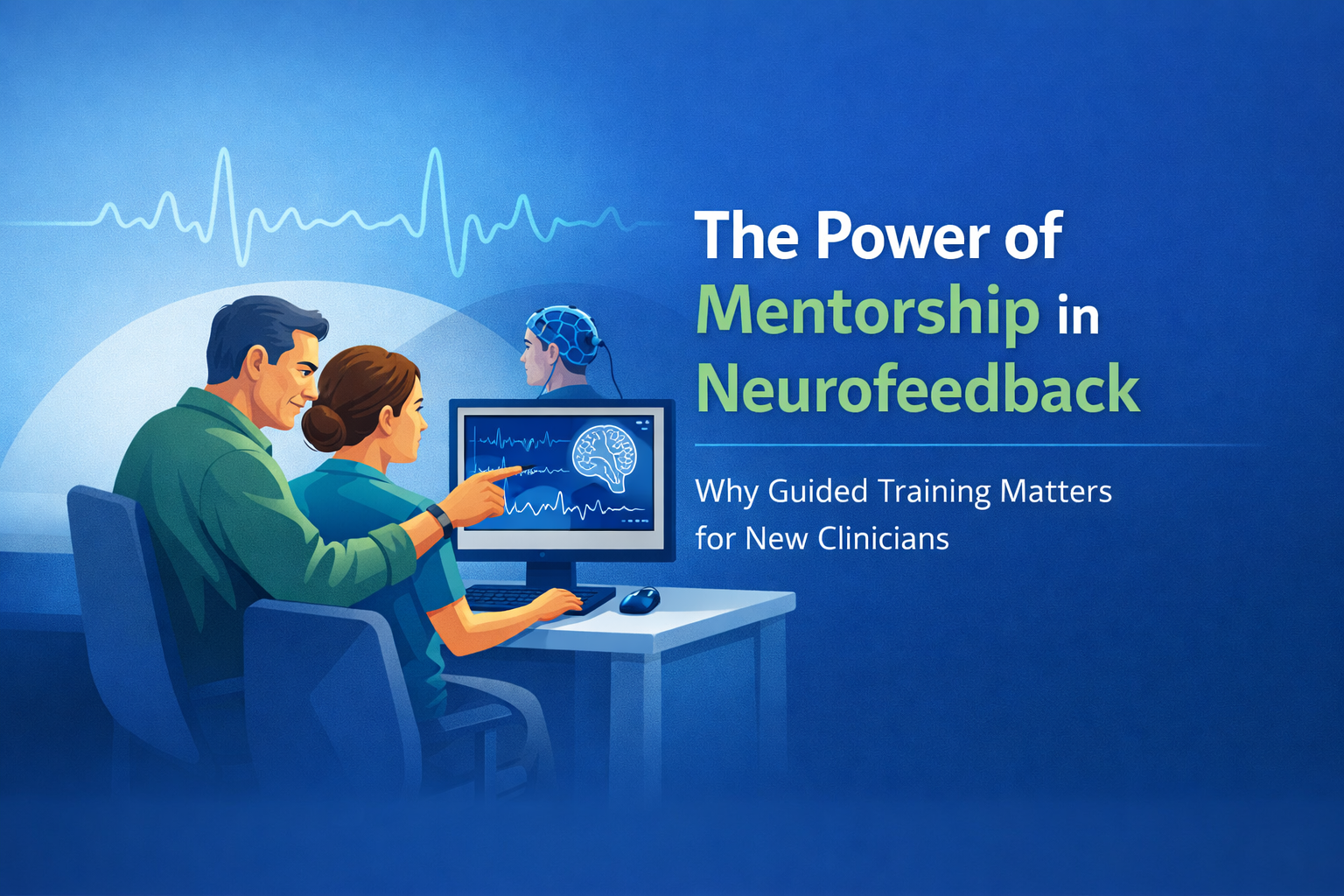
Many clinicians entering the field of neurofeedback share a similar early experience. For those beginning their training, neurofeedback mentoring often becomes one of the most important elements in learning how to translate theory into real clinical practice.
Imagine a psychologist who has spent years treating clients with anxiety, trauma, or ADHD. After studying neurofeedback and completing an introductory course, they decide to add the technology to their practice. The equipment arrives. The software is installed. The first client session is scheduled.
Everything seems straightforward at first—until the session begins.
Questions quickly emerge. Are the electrodes placed correctly? Is the protocol appropriate for the client’s symptoms? If the training metrics shift mid-session, should the clinician adjust the thresholds or let the training continue?
These moments are common when clinicians first begin working with neurofeedback. The scientific aspects can be studied through coursework, but the practical skill of running sessions, interpreting data, and adjusting protocols primarily develops through experience.
That is where neurofeedback mentoring becomes essential.
Neurofeedback Mentoring Bridges the Gap Between Theory and Practice
Neurofeedback sits at the intersection of neuroscience, psychology, and real-time physiological monitoring. Coursework can provide a strong foundation in EEG patterns, brainwave frequencies, and protocol design. However, translating that knowledge into clinical decision-making requires practice.
Each client’s brain activity presents a unique set of patterns. Symptoms may overlap across multiple conditions, and responses to training can vary from session to session. Clinicians must learn to recognize when a protocol is working, when adjustments may be needed, and how to interpret subtle shifts in training data.
Through neurofeedback mentoring, new practitioners can review sessions with experienced clinicians who provide guidance on protocol selection, electrode placement, and interpretation of training data.
Over time, this mentorship process helps clinicians build confidence in both the technical and clinical aspects of neurofeedback practice.
Mentorship as a Professional Standard
The importance of neurofeedback mentoring is reflected in the standards established by the Biofeedback Certification International Alliance (BCIA), the leading certification organization for neurofeedback practitioners. Clinicians pursuing certification can review the BCIA Neurofeedback Entry Level requirements, which outline the broader training path, and use BCIA’s Find a Mentor directory to connect with approved mentors.
Clinicians pursuing certification must complete formal coursework along with a supervised mentorship component. According to the BCIA neurofeedback certification requirements, practitioners are required to complete 25 contact hours with a BCIA-approved mentor, with at least two hours conducted face-to-face.
During this mentorship process, clinicians develop practical skills by reviewing several types of training activities with their mentor. These typically include:
- Self-regulation sessions, where trainees run neurofeedback training on themselves and review the results with a mentor.
- Supervised client sessions, in which the clinician conducts full neurofeedback sessions while refining their technical and clinical skills.
- Detailed case study presentations, documenting the full process of assessment, protocol selection, treatment adjustments, and client outcomes.
These requirements reflect an important principle within the field: neurofeedback is not simply a technology to operate, but a clinical skill that develops through guided experience. BCIA also outlines mentorship expectations in its mentor program guidelines, reinforcing the importance of structured mentoring in neurofeedback education.
What Effective Neurofeedback Mentoring Provides
While mentorship structures may vary between training programs, effective neurofeedback mentoring tends to include several key elements.
First, clinicians benefit from reviewing real session data with an experienced practitioner. Looking at brain maps, training reports, and client progress over time helps clinicians learn how experienced providers interpret patterns in the data.
Second, mentorship offers feedback on protocol selection and adjustments. Small decisions about thresholds, electrode placement, or training parameters can influence outcomes, and learning how experienced clinicians approach these decisions can significantly accelerate the learning process.
Finally, mentorship provides an opportunity to discuss real clinical cases. Reviewing complex cases with a mentor helps clinicians understand how neurofeedback can be integrated with broader therapeutic goals.
Together, these elements create a learning environment where clinicians can gradually build both technical competence and clinical confidence.
Mentorship in Modern Neurofeedback Training
As neurofeedback has grown in popularity, many training organizations have begun integrating structured mentorship models into their education programs.
For example, some neurofeedback platforms now include guided onboarding and mentoring as part of their provider training. NewMind, a neurofeedback software platform, has developed a structured mentorship and onboarding pathway designed to help clinicians move from setup to real clinical implementation.
Programs like this often combine technical instruction with supervised practice and mentorship. In NewMind’s case, the training model includes several elements designed to support clinicians as they begin working with neurofeedback:
- BCIA-aligned training, helping clinicians pursue recognized neurofeedback competency standards through the NewMind Academy BCIA neurofeedback training program.
- A structured eight-session onboarding process that walks providers through setup, brain mapping, reporting, and clinical integration.
- Hands-on learning, with clinicians practicing brain maps and training sessions between mentorship meetings.
- Brain mapping and assessment training, helping providers translate EEG recordings into meaningful clinical insights.
- Clinical mentorship from experienced practitioners, including guidance from NewMind co-founder and clinical director Dr. Richard Soutar.
- Instruction on delivering home neurofeedback, allowing clinicians to support remote training for clients.
- Practice development guidance, covering topics such as client acquisition and integrating neurofeedback into an existing practice.
- Dedicated onboarding support, where providers work directly with a specialist during the training process.
- Direct engagement with leadership, including a final onboarding review session.
Clinicians interested in structured mentorship programs can explore the NewMind mentorship program or read about practitioner collaboration through the NewMind community blog.
Building Confidence Through Neurofeedback Mentoring
For clinicians entering the field, neurofeedback mentoring often becomes one of the most valuable aspects of training. While courses and textbooks provide the scientific foundation, mentorship offers something equally important—practical insight gained through experience.
For it is only by reviewing sessions with experienced practitioners, discussing clinical decisions, and analyzing real case studies that clinicians gradually develop the skills needed to use neurofeedback confidently and effectively.
In many ways, mentorship is what helps clinicians move past that first uncertain session—the moment when theory meets real clinical practice. With the guidance of experienced practitioners, the learning curve becomes less intimidating and far more rewarding.
Clinicians interested in structured mentorship options can learn more about how mentoring works within the NewMind training ecosystem by visiting the NewMind Neurofeedback Mentorship program page, which outlines the onboarding process, mentoring structure, and clinical guidance available to providers.

NewMind Technologies
NewMind Technologies, established in 2005, provides neurofeedback solutions tailored for clinicians and wellness practitioners. NewMind's system integrates EEG-based brain mapping with cognitive assessments to create individualized training protocols. Designed for both in-clinic and remote settings, the software emphasizes ease of use while offering advanced features. Beyond the technology, NewMind offers educational resources, including self-guided certification courses and weekly webinars, to support ongoing professional development