

When Sleep Hygiene Isn’t Enough: How Neurofeedback Can Support Insomnia Care
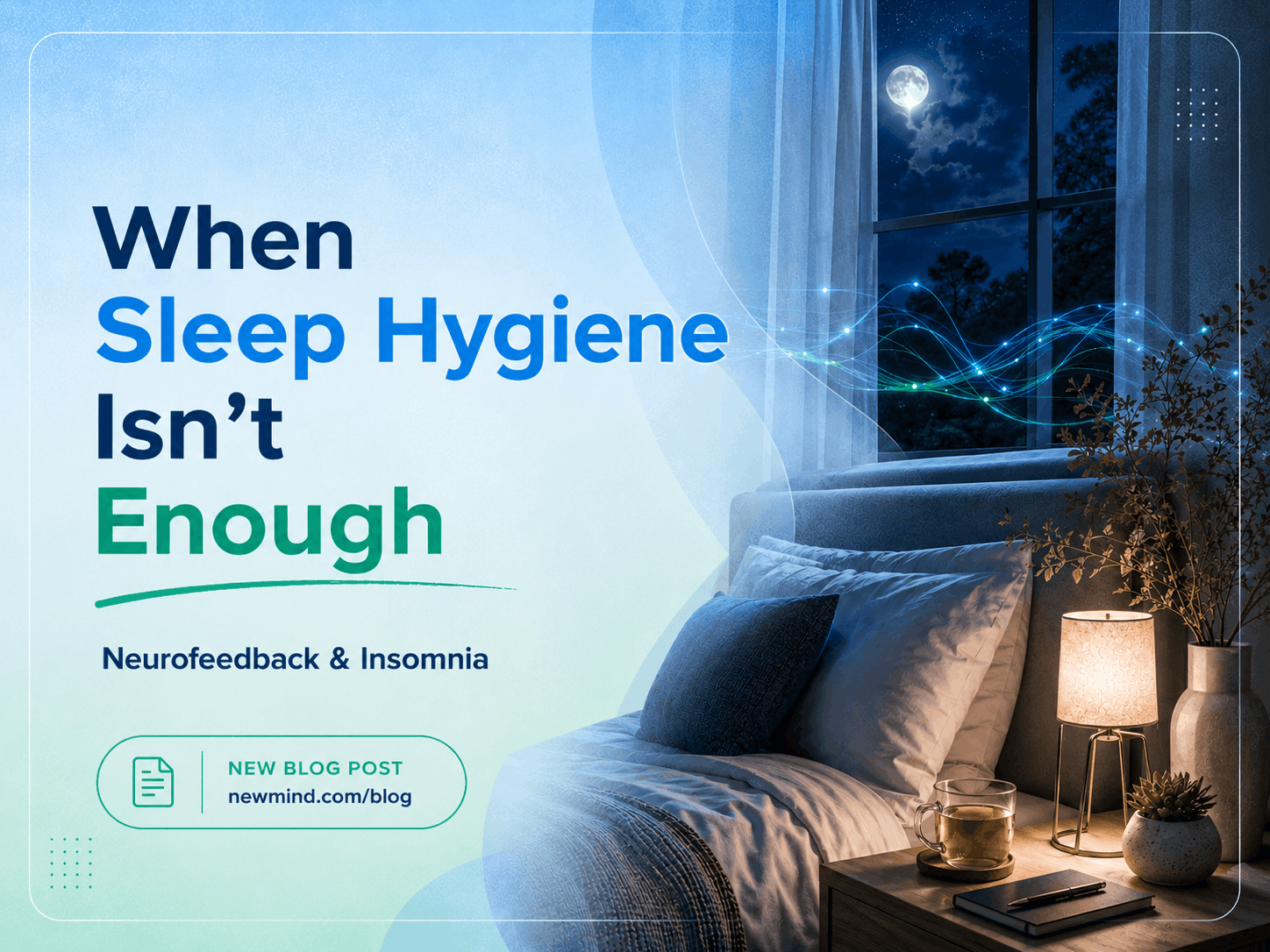
Most conversations about insomnia start with the same advice: keep a consistent sleep schedule, avoid caffeine later in the day, turn off screens before bed, and make the bedroom darker, cooler, and quieter.
That advice isn’t wrong. In fact, sleep hygiene is often a very good place to start. It’s also commonly included within behavioral approaches to insomnia, including CBT-I, which is widely recognized as a first-line treatment for chronic insomnia. The problem is that many clients have already tried these things by the time they walk into a provider’s office. They’ve already bought the blackout curtains. They’ve tried the bedtime routine. They’ve cut back on coffee, but they still cannot sleep.
For clinicians, that’s where the conversation needs to become more personalized.
Insomnia is rarely just about what happens at bedtime. For many clients, sleep problems are connected to stress, hyperarousal, racing thoughts, irregular rhythms, or difficulty shifting the brain and body into a calmer state. If the nervous system is still acting like it needs to stay on alert, better bedtime habits may help around the edges, but they may not solve the deeper problem.
That’s also why two clients with “insomnia” may need very different clinical conversations. One person may struggle to fall asleep because their mind feels active the moment the room gets quiet. Another may fall asleep easily but wake at 3 a.m. and never fully settle again. Someone else may technically sleep through the night but still wake up feeling foggy, tense, or unrested. These are different patterns, and they deserve more than the same list of sleep tips.
This is where neurofeedback can be useful.
Rather than treating insomnia as a generic sleep complaint, neurofeedback gives clinicians a way to look at patterns of brain regulation. A client who struggles to fall asleep might not have the same underlying pattern as a client who wakes repeatedly or a client who sleeps for eight hours and still wakes exhausted. Those differences matter because the goal isn’t simply to “make someone sleep.” The goal is to understand what may be getting in the way of healthy regulation.
With the right assessment, including symptom history and qEEG data when appropriate, clinicians can make better decisions about which patterns may be contributing to their client’s sleep difficulties. Training can then be tailored toward helping the brain improve self-regulation, reduce excessive arousal, and support more stable states of rest. For example, NewMind has also discussed the relationship between delta waves and deep sleep, which can be an important part of understanding how brainwave patterns relate to restorative rest.
Obviously, sleep hygiene still has a role here. A client’s daily routine, evening habits, light exposure, caffeine use, stress load, and sleep environment all matter. But those factors should be part of the larger clinical picture, not the whole explanation. If a client’s brain and body are still operating as if they need to stay alert, a better pillow or earlier bedtime may not be enough.
In practice, the most effective approach is often both/and. You can help the client clean up the habits that may be interfering with sleep, while also looking at whether the brain is having trouble shifting into the states that support rest and recovery. That combination can be especially helpful for clients who feel frustrated because they have already tried the standard advice and still do not feel better.
That’s one of the reasons I believe neurofeedback belongs in the broader conversation about insomnia care. It does not replace good sleep habits, medical evaluation, or behavioral treatment when those are needed. But it can help clinicians ask better questions and build a more personalized plan.
For clients who have already tried the standard sleep advice and are still struggling, that kind of personalization can make all the difference.
Interested in using neurofeedback to support clients with sleep challenges? Why not discover how NewMind’s tools help providers assess brain patterns, personalize protocols, and track progress over time?

Shawn Bearden
Shawn Bearden is the CEO and co-founder of NewMind Technologies, where he leads the development of neurofeedback software designed to simplify and scale brain-based training. With experience in software engineering, technology, and business strategy, he focuses on creating systems that bridge neuroscience and practical clinical use. His writing explores the intersection of neurofeedback, mental health innovation, and emerging treatment models, including trauma recovery, PTSD, and psychedelic-assisted therapy. Shawn is particularly interested in how these approaches can work together to improve outcomes and expand access to effective care.